Navigating the Crossroads of Education: A Reflection on Part I of the Book
Embarking on the exploration of Part I of our reading journey has been a riveting experience, unveiling the historical evolution of public education in the United States. As a group, we engaged in discussions and ranked words, phrases, and sentences that encapsulated the complexities of the common school system. This reflection delves into the key themes that emerged, considering the impact of compromise, societal divisions, and personal experiences within the context of public education.
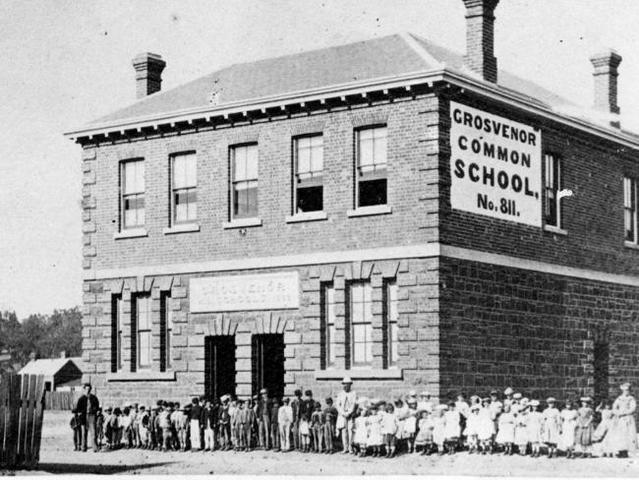
Compromise: A Cornerstone of Common School Development
Our group unanimously ranked the word
'compromise' as the most pivotal in understanding the roots of the common
school system. The intricate dance of compromise unfolded during the 1850s when
a surge of immigrant Roman Catholics entered the nation, necessitating a shared
public school system. The challenges of different religions and anti-Irish
sentiments led to protests and confrontations, forcing adjustments and
compromises. The idea of compromise resonated deeply, emphasizing the crucial
role negotiation played in laying the foundation for an inclusive education
system.
Societal Divisions and the Common School System:
The ranking of 'segregated' as the second-most
important word underscored the stark divisions within the American society
portrayed in Part I. Economic disparities, racial inequalities, and the
struggles faced by Black individuals in accessing quality education were
prevalent themes. The segregation of schools along racial and economic lines
highlighted the grim reality that education, meant to be a unifying force, was
contributing to societal divisions. The phrase "better education would not
mean a better position in society" encapsulates the nuanced relationship
between education and social status during this period.

The Catalyst of Immigration:
Immigration, our third-ranked word, emerged as
a catalyst for the genesis of the common school system. The influx of diverse
populations in the 1850s sparked conversations about finding a balance between
local and central direction in education. Immigration became the driving force
behind the need for creative solutions, leading to the establishment and
development of public schools. The phrase "place where we all came
together, elite or poor" encapsulated the idealistic vision of a common
school system that transcended social and economic divides.
Ranking Phrases: Capturing the Evolution of Education
Our group's ranking of phrases highlighted the
historical evolution of education and societal attitudes towards it. The
top-ranked phrase, "Development comes with compromise," encapsulated
the overarching theme of compromise that ran through the common school system's
development. It acknowledged the challenges faced and the negotiations that
paved the way for an inclusive education system. The second-ranked phrase,
"raking a few geniuses from the rubbish," spoke to the expansion of public
schools in the late nineteenth century, signaling a shift towards a more
inclusive educational system.

Public Education: Division in Unity
Public education in the United States has long
been considered a powerful tool for fostering unity among individuals from
diverse backgrounds and ethnicities. The nation's foundation was built upon the
collaborative efforts of people from all corners of the world who, despite
their differences, came together to establish not only a new government but
also an educational system that aimed to unify its people, transcending racial
and socioeconomic divides (Chen, 20203).
However, a closer examination reveals that the
system itself is not immune to perpetuating disparities. While the ethos of
public education initially sought to be an equalizer, the reality is that the
system can perpetuate inequalities. Jill Barshay's study underscores a
troubling aspect of this divide, shedding light on the disparities in funding
between predominantly white schools and those with larger Latino and black
populations (Barshay, 2020).
The inequitable distribution of resources in
education is a complex issue, affecting everything from classroom
infrastructure to teacher salaries and access to advanced coursework.
Predominantly white schools often have larger budgets, allowing for better
facilities, up-to-date technology, and a wider array of extracurricular
activities. This financial advantage positions students in these schools for a
more enriching educational experience, giving them a head start in the
competitive academic landscape.
On the other hand, schools with predominantly
Latino and black student populations often face resource shortages, leading to
overcrowded classrooms, outdated textbooks, and fewer extracurricular
opportunities. This discrepancy not only hinders the academic achievements of
students but perpetuates a cycle of disadvantage, making it harder for them to
compete on an equal footing with their counterparts from more affluent schools.
The consequences of this educational disparity
are far-reaching and extend beyond the classroom and into the broader societal
landscape. Unequal access to quality education can limit the future
opportunities and life outcomes of students from underprivileged communities,
contributing to the perpetuation of social and economic inequality.
Furthermore, it challenges the very notion of a united nation that values the
potential of every individual, regardless of their background.
Personal Reflection: Adapting to a New System
Upon arriving in the United States, the school
system felt overwhelming and unfamiliar to me. The structured rote learning
methods I was accustomed to in my homeland had been replaced by a pedagogy that
prioritized critical thinking and active participation. I also faced the
challenge of navigating a language barrier, which left me feeling isolated
among unfamiliar faces. With the unwavering support of my teachers,
classmates, and family I began to unravel the intricacies of the new
educational landscape. It became evident that the system held the potential to
empower and broaden my horizons, encouraging me to think critically and engage
actively in the learning process. As I adapted, I discovered the transformative
power of education in fostering personal growth and intellectual development.
However, the echoes of inequality resonated
persistently throughout my educational journey. The subtle reminders of
disparities in access to resources and opportunities served as poignant markers
of the ongoing struggle for a truly inclusive education system. Despite the
positive aspects of my educational experience, I remained aware of the broader
societal challenges.
References
Barshay, J. (2020, June
29). A decade of research on education inequality in America. The
Hechinger Report.
https://hechingerreport.org/a-decade-of-research-on-the-rich-poor-divide-in-education/
Chen, G. (2023, August 24).
A relevant history of public education in the United States. Public
School Review.
https://www.publicschoolreview.com/blog/a-relevant-history-of-public-education-in-the-united-states


.jpg)
Comments
Post a Comment